 listicle
Mental Health Awareness Clothing Brands: 2026 Guide
Table of Contents
- Why Mental Health Awareness Clothing Brands Matter in 2026
- Quick Comparison: Top Mental Health Clothing Brands
- BoSsSwAmEe: Smile-Themed Mental Health Clothing and Personalized Style
- Stay Another Day: Crisis Support Messaging With Every Purchase
- Season Of Sunday: Self-Care Focused Apparel for Healing
- Only Human: Educational Resources Meets Retail Therapy
- How to Support Mental Health Through Fashion: A Practical Guide
- What to Look For: Sensory-Friendly Design, Ethical Manufacturing, and Impact Measurement
- The Bottom Line on Mental Health Awareness Clothing Brands
- Frequently Asked Questions
Last Updated: October 4, 2026
Why Mental Health Awareness Clothing Brands Matter in 2026
Mental health awareness clothing brands are apparel companies that design garments carrying messages, symbols, or designs intended to reduce stigma and start conversations about emotional well-being. Unlike standard graphic tees, these brands tie their products to advocacy, community connection, and often charitable giving.
The reason is simple. Wearing a message about mental health support does something a social media post cannot: it puts the conversation on your chest, in the grocery queue, at the bus stop. A hoodie that reads "Stay Another Day" or a tee with a simple smile becomes a conversation starter. That small moment of vulnerability can open a door for someone who is struggling.
The market reflects this. According to Mental Health Foundation research on stigma, stigma remains one of the biggest barriers preventing people from seeking help. Advocacy apparel does not solve that alone, but it chips away at the silence. Below, we break down what each brand actually does with your purchase, and how to choose clothing that supports your own well-being too.
Quick Comparison: Top Mental Health Clothing Brands
Here is how some mental health awareness clothing brands stack up on messaging, product range, and mission focus.
| Brand | Core Message | Product Range | Mission Focus | Best For |
|---|---|---|---|---|
| BoSsSwAmEe | Smile-themed positivity | Tees, hoodies, accessories | Community kindness, mental awareness | Personalized style and uplifting design |
| Stay Another Day | Crisis support | Apparel with crisis messaging | 988 Suicide & Crisis Lifeline support | Suicide prevention advocacy |
| Season Of Sunday | Hope and healing | Hoodies, hats, tees | Self-care and healing | Comfort-focused self-care wear |
| Only Human | Mental health consciousness | Apparel plus resources | Education and community | Shoppers wanting resources with products |
Each brand takes a different route to the same goal. The right pick depends on whether you want bold crisis messaging, gentle self-care reminders, or something that simply makes you smile when you put it on.
BoSsSwAmEe: Smile-Themed Mental Health Clothing and Personalized Style
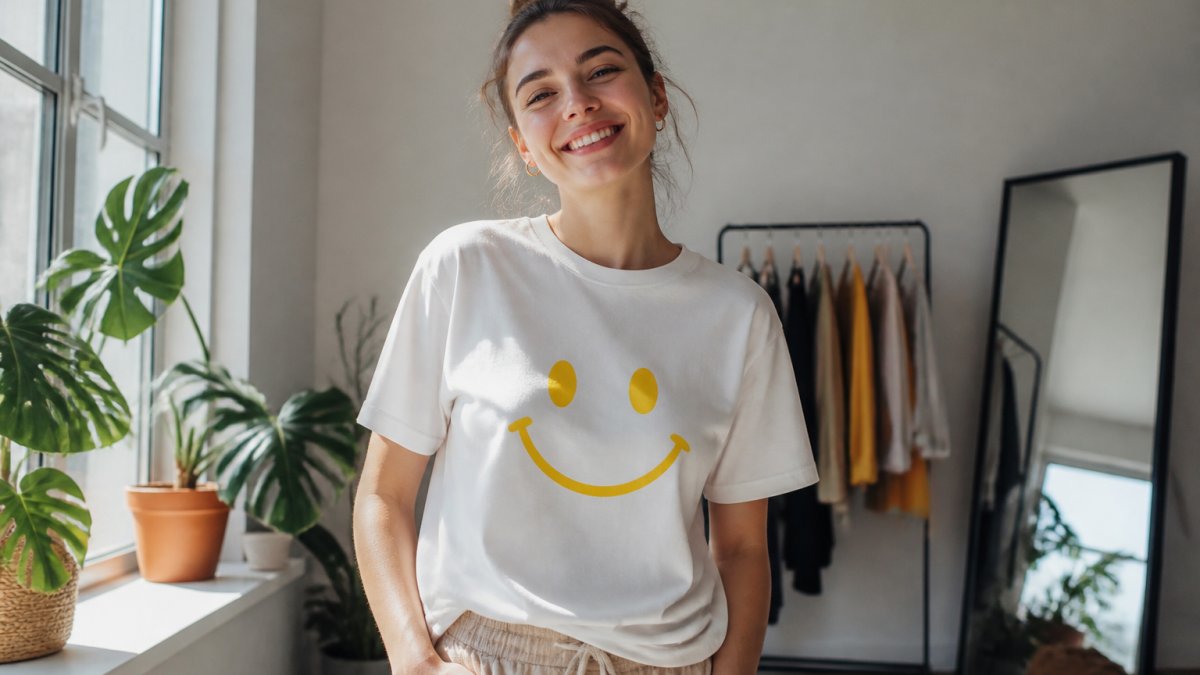
BoSsSwAmEe offers mental health awareness clothing that feels genuinely uplifting rather than heavy. The brand builds its entire collection around smile-themed apparel and accessories, with a clear focus on mental awareness and community kindness. Every purchase supports a mission that goes beyond style.
What Makes BoSsSwAmEe Different
BoSsSwAmEe offers several distinctive features. First, the design philosophy: instead of dark or clinical imagery, the collection uses warmth and positivity to make mental health support feel approachable. Second, personalized style advice. Third, a community-first mindset, where kindness is the product as much as the fabric.
Pricing and What You Get
We do not publish fixed price lists, because pricing depends on the specific item, design, and any personalization you request. The honest answer is that mission-driven apparel often involves thoughtful design and supports community initiatives. For current prices on any piece, check the BoSsSwAmEe website directly.
Stay Another Day: Crisis Support Messaging With Every Purchase
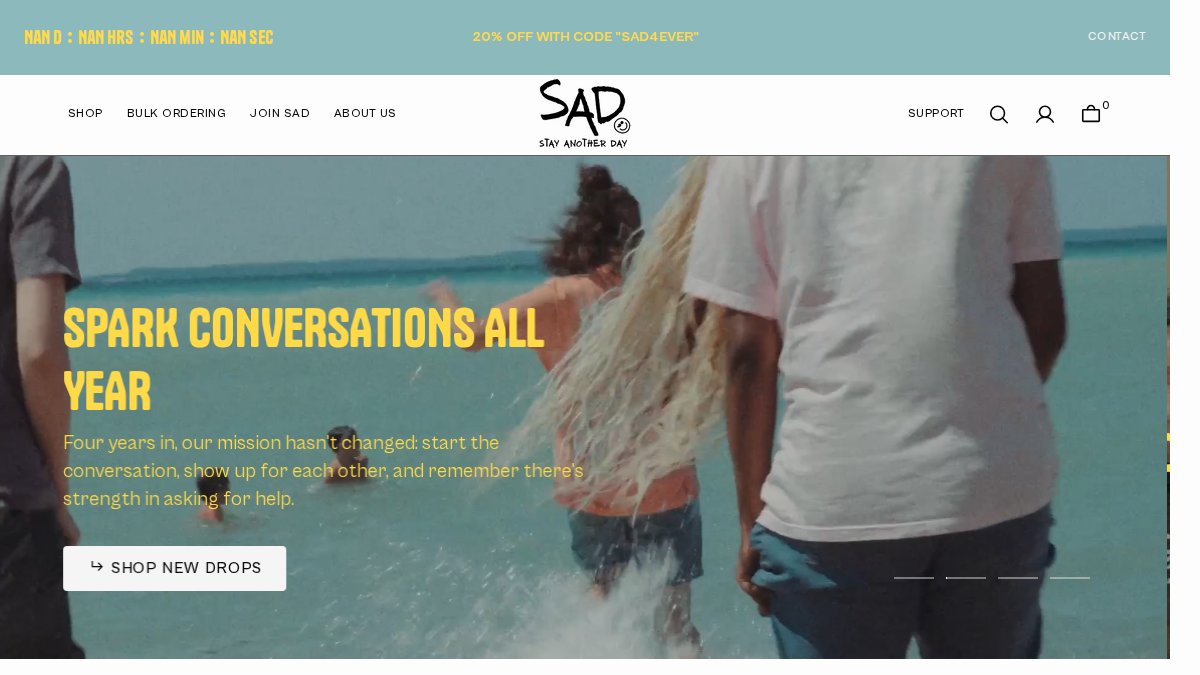
Stay Another Day is a crisis-support brand in this category. Its apparel carries messages like "Stay Another Day" and "You Are Not Alone," and the brand states that a portion of every purchase supports the 988 Suicide & Crisis Lifeline. That directness matters: for someone who has lost a loved one to suicide, wearing a shirt that names the crisis line is both a memorial and a signal to others that help exists.
The product line is intentionally narrow. You will find heavyweight hoodies, classic tees, and a few accessories, all built around the same core message. The trade-off is variety: if you want a wide wardrobe of different slogans or seasonal drops, you will run out of choices quickly. What you get instead is a clear, unambiguous link between your purchase and crisis resources.
A practical note on impact: the brand does not publish a specific donation percentage on every product page. If measurable giving is your priority, consider asking the brand directly about their donation practices.
Season Of Sunday: Self-Care Focused Apparel for Healing
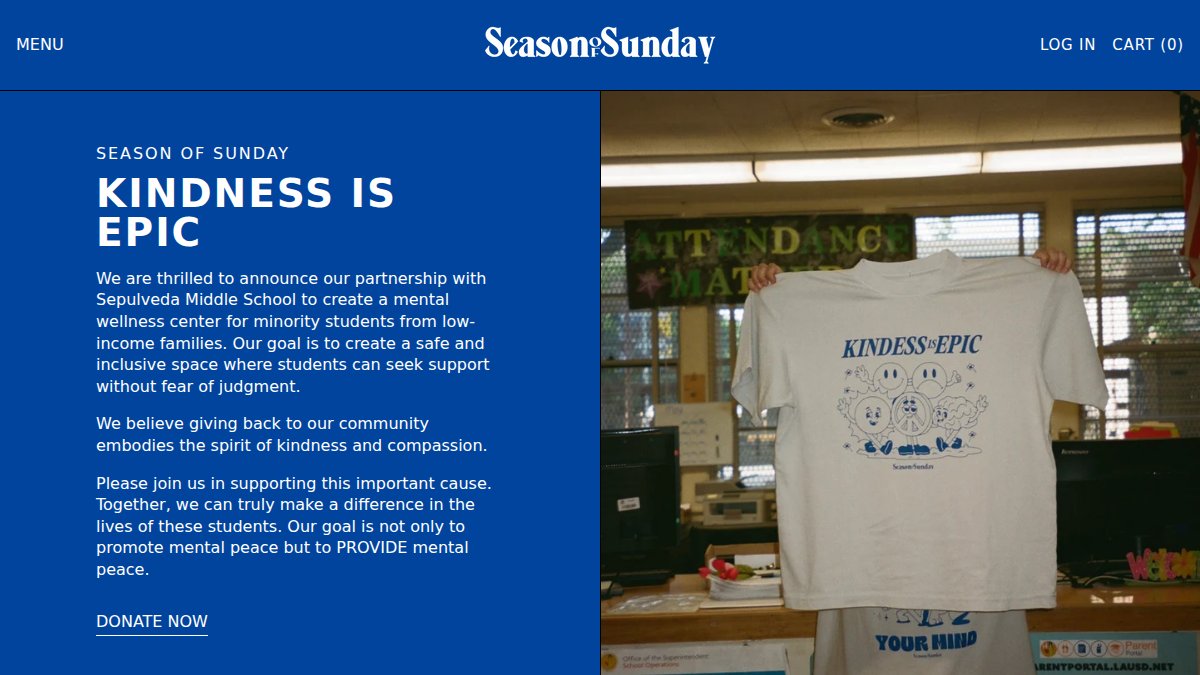
Season Of Sunday frames its clothing around hope, healing, and the celebration of mental health. The range spans hoodies, hats, and tees, with messaging centered on self-care and support. It is comfort-first apparel, and the branding leans positive and gentle rather than confrontational.
If you value a soft, healing aesthetic over hard-edged advocacy, this brand fits that brief well.
Only Human: Educational Resources Meets Retail Therapy
Only Human integrates mental health consciousness into its design approach and pairs its products with educational resources for its audience. The model is closer to "retail therapy plus learning" than pure apparel sales.
The brand treats clothing as one part of a broader mental health conversation, not the whole thing. The brand focuses less on specific charity donation percentages than some others, so if measurable giving is your priority, consider asking directly before you buy.

How to Support Mental Health Through Fashion: A Practical Guide
Supporting mental health through fashion is simpler than it sounds. You do not need to launch a campaign or become an advocate overnight. You need to make deliberate choices about what you wear, where you buy, and how you talk about it.
Here is a practical sequence we recommend:
- Choose a message you can stand behind. If you have personal experience with anxiety, grief, or recovery, pick apparel that reflects it honestly.
- Buy from brands that explain their giving. Ask what percentage goes where, and to which organization.
- Wear it visibly. A shirt only starts conversations if people can see it.
- Answer honestly when asked. You do not need a script, just a sentence about why the cause matters to you.
- Support others wearing the same message. A nod or a "me too" costs nothing and reinforces community connection.
- Rotate your wardrobe mindfully. Treat advocacy pieces as part of your regular rotation, not special-occasion items.
The point is consistency. One tee worn once is a purchase. The same tee worn weekly becomes part of how you show up in the world.
What to Look For: Sensory-Friendly Design, Ethical Manufacturing, and Impact Measurement
Three factors to consider when choosing a mental health awareness clothing brand are sensory-friendly design, ethical manufacturing, and impact measurement. Here is how to evaluate each one.
Sensory-friendly design is not a nice-to-have for many people with anxiety, ADHD, autism, or sensory processing differences. A scratchy tag, a stiff seam, or a rough fabric can trigger genuine distress. Look for three things: (1) printed labels instead of sewn-in tags, (2) soft cotton or bamboo blends with a smooth hand feel, and (3) relaxed or tagless construction. Some brands list fabric weight and seam type directly on the product page. If a brand does not mention these details, it may be worth inquiring further if these factors are important to you.
Ethical manufacturing is where brand transparency gets tested. Ask three questions: Where is the garment made? Who makes it? Does the brand publish that information? Consider looking for factories listed by name or country, certifications like Fair Trade or WRAP, and any statement about living wages. The absence of this information may be a point to consider.
Impact measurement is the hardest to verify and the most important. A vague promise to "support mental health" means little. A named partner organization, a stated donation amount or percentage, and periodic reporting mean a great deal. According to Charity Navigator's guidance on evaluating charities, transparency about how funds are used is one of the strongest signals of a trustworthy organization. Consider applying a similar standard to clothing brands: if they cannot name the organization and the amount, it may be worth further investigation.
| Factor | What to Check | Red Flag |
|---|---|---|
| Sensory comfort | Fabric blend, tag type, fit | Stiff seams, scratchy labels |
| Ethical production | Published factory or supplier info | No manufacturing details anywhere |
| Impact measurement | Named charity partner, stated percentage | Vague "we give back" language |
| Inclusive sizing | Full size range listed | Limited sizes with no explanation |
Consider how to verify a brand's impact after you buy. A simple method is to check the brand's social media or email newsletter for donation receipts or partner announcements. If a brand claims to support a cause but never shows proof, that is a signal. Brands that are transparent often make verification easy.
The Bottom Line on Mental Health Awareness Clothing Brands
Finding apparel that supports mental health support can be a consideration. The brands above each offer different approaches, and the choice comes down to which message you want to carry and the level of transparency you seek.
At BoSsSwAmEe, we built our collection around smile-themed apparel and accessories that help you look and feel good inside and out, with personalized style advice so every piece fits your wardrobe and your values. Each purchase supports our focus on mental awareness and community kindness. Get started with BoSsSwAmEe and find clothing that carries a message worth wearing.
Frequently Asked Questions
What are some clothing brands that support mental health?
Several brands build their mission around mental health advocacy. BoSsSwAmEe offers smile-themed mental health clothing and supports community kindness initiatives. Stay Another Day directs funds to the 988 Suicide & Crisis Lifeline. Season Of Sunday focuses on self-care and healing messaging. Only Human integrates educational resources into its retail model. Each brand takes a different approach, so compare their charitable giving, design style, and price points before choosing.
What should I look for when buying mental health awareness clothing?
Check three things: material comfort (soft fabrics like cotton or bamboo help with sensory-friendly wear), brand transparency (do they publish donation details or impact reports?), and message authenticity (does the design feel genuine or performative?). Also look for inclusive sizing and ethical manufacturing claims. If a brand cannot tell you where its clothes are made or how much it donates, that may be a point to consider.
Do mental health clothing brands donate to charity?
Many do, but the amounts and recipients vary. Stay Another Day supports the 988 Suicide & Crisis Lifeline. BoSsSwAmEe focuses on community kindness initiatives. Some brands donate a percentage of profits; others fund specific programs. Ask brands directly for proof of donations, such as annual reports or partner lists. Transparency separates genuine advocacy from marketing claims.
How does wearing mental health awareness apparel help advocacy?
Wearing mental health awareness clothing starts conversations. A graphic tee with a supportive message can signal to others that mental health matters, reducing stigma one interaction at a time. It also creates visibility for causes that often go unspoken. For the wearer, it can serve as a reminder of self-care and emotional well-being. The impact grows when brands pair messaging with real charitable action.
How can fashion contribute to mental health awareness?
Fashion contributes by making mental health visible and normalizing conversations. Brands that use advocacy apparel, donate to mental health non-profits, and design sensory-friendly clothing address both awareness and practical comfort. When you buy from these brands, you support ethical manufacturing and signal that emotional well-being matters. The key is choosing brands that back their message with measurable action, not just slogans.