 how-to
Uplifting Fashion for Young Adults: Style That Lifts You
Table of Contents
- Why Uplifting Fashion Matters for Young Adults
- The Benefits of Wearing Positive Clothing
- How Fashion and Mental Health Connect
- Confidence-Boosting Outfits You Can Build Today
- Smile-Themed Apparel: Small Details, Big Mood Shift
- Building a Versatile Wardrobe on a Budget
- Making Uplifting Fashion Work for Your Body and Identity
- Conclusion
- Frequently Asked Questions
Last Updated: October 9, 2026
Why Uplifting Fashion Matters for Young Adults
Uplifting fashion for young adults is clothing chosen on purpose to raise your mood, not just fill your closet. It is the difference between getting dressed on autopilot and pulling on something that makes you stand a little taller. At BoSsSwAmEe, young adults want clothes that say something kind.
The idea is simple. What you wear sits against your skin all day. It follows you into lectures, first jobs, and coffee meetups. So the clothes you pick can quietly shape how you carry yourself.
Many young adults describe the same pattern. A bright tee or a favorite cardigan changes their posture before they say a single word. That small lift is the whole point.
Below, we break down why positive clothing works, how to build confidence-boosting outfits, and how to do it without overspending.
The Benefits of Wearing Positive Clothing
The benefits of wearing positive clothing come down to three things: mood, confidence, and connection. A graphic print or a soft color can shift your mindset before you leave the house. Researchers studying how clothing affects the wearer describe this as "enclothed cognition," the idea that what we wear influences how we think and feel. You can read more about the concept through enclothed cognition research overview.
Here is what people tend to notice most:
- A lift in mood from color and comfort
- More confidence in social settings
- A conversation starter that connects you to others
- A daily reminder of a value you care about
That last point matters more than it sounds. A smile-themed tee is not just a design. It is a small message you wear, and it often sparks kind moments with strangers.
How Fashion and Mental Health Connect
Fashion and mental health connect through routine, self-expression, and control. Getting dressed is one of the few daily choices you fully own. When everything else feels loud, that choice stays yours.
Many people find that dressing with intention helps on hard days. You are not fixing a mood with a shirt. You are giving yourself one small, kind act to start from.
A few practical ways this shows up:
- Choosing a color you love when you feel low
- Wearing a piece tied to a good memory
- Picking comfort first on high-stress days
- Using accessories as a quiet confidence boost
The Mental Health Foundation notes that small daily actions can support wellbeing over time. Getting dressed with purpose fits that idea well. It is low effort and repeatable.
That is the real link. It is not about a magic outfit. It is about the small, steady choices you make for yourself.
Confidence-Boosting Outfits You Can Build Today
Confidence-boosting outfits start with one rule: build around a piece you already love. Pick the item that makes you feel good, then add simple layers that support it. The goal is a look that feels like you, not a costume.
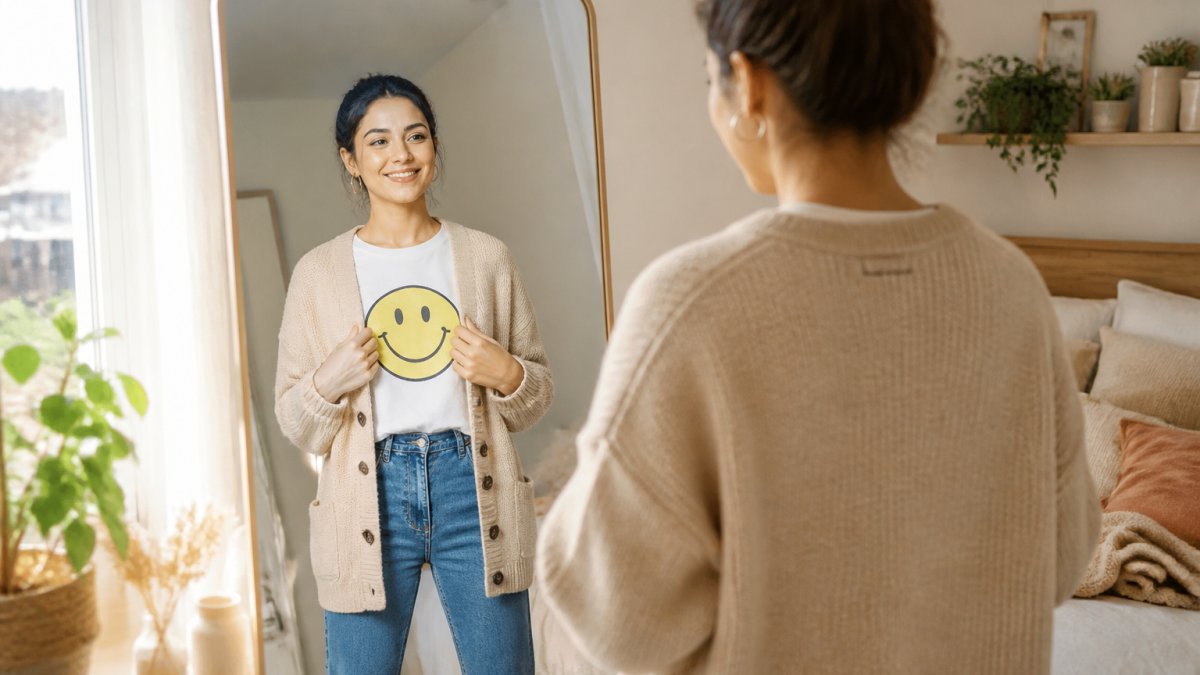
Here are five outfit ideas you can put together today:
- Graphic tee plus open cardigan. Covers a casual day and still looks put together.
- Tiered dress plus denim jacket. Easy for brunch, class, or a first date.
- Soft tailoring plus a chain necklace. Dressy enough for work, relaxed enough for after.
- Denim plus a bold statement piece. A leopard print scarf or fringe bag lifts a plain look.
- Trench coat plus a bright tee. A classic layer that makes any basic feel polished.
Each one mixes and matches with what you already own. You do not need a new wardrobe. You need a few smart swaps.
Smile-Themed Apparel: Small Details, Big Mood Shift
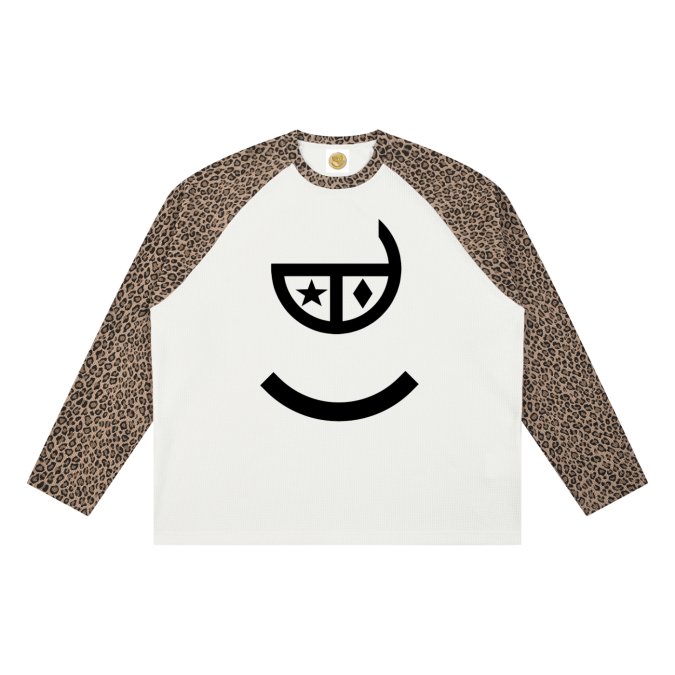
Smile-themed apparel works because it turns a feeling into something you can wear. A small smile print on a tee or a charm on a bag is a quiet reminder. It says something positive without you having to say a word.
The detail does not have to be loud. A tiny graphic, a soft color, or a simple ring can carry the same message. This is where accessories earn their place. A chain necklace, a ring, or red lips can finish a look and shift the mood at the same time.
BoSsSwAmEe designs smile-themed apparel and accessories with this in mind. Each piece pairs a simple design with a mission: promoting mental awareness and supporting community kindness.
If you like a minimalist or edgy look, this can still work. Pair one smile piece with darker basics and clean lines. The contrast makes the detail stand out more.
Building a Versatile Wardrobe on a Budget
A versatile wardrobe is built from a small set of pieces that work in many combinations. You do not need a big budget. You need a system for deciding what earns a place in your closet.
Cost per wear is the core of that system. The math is simple: divide the price by the number of times you realistically expect to wear the item. A $60 jacket worn twice a week for a three-month season works out to roughly $2.50 per wear.
Before you buy anything, run each candidate through four questions:
- How many outfits can I build with it? If it only works with one other piece you own, it is a costume, not a staple.
- How many wears per month will it actually get? Be honest about your real week, not your imagined one.
- Does it survive my laundry routine? A delicate piece you are afraid to wash gets worn less, which raises its cost per wear.
- Can I afford it without stress? If the answer is no, the confidence boost is cancelled out by the worry.
Here is a starter set that covers most days for a student or early-career young adult:
- Two plain tees and one graphic print
- One pair of well-fitting denim
- One cardigan and one trench coat
- One dress that works day or night
- One statement piece, like bold jewelry
That is roughly eight items. From those, you can build dozens of looks. Add tights in cooler months and swap the cardigan for soft tailoring when you need a dressier outfit.
A practical shopping order helps you avoid impulse buys:
- Replace what is worn out first. A faded basic you wear weekly is a better buy than a new trend piece.
- Fill the gap that blocks the most outfits. If you own five tops but no bottom that works with them, that is your priority.
- Add one statement piece per season. This is where personality enters without blowing the budget.
- Wait 48 hours before any unplanned purchase. Most impulse buys do not survive the pause.
Thrift and secondhand stores, clothing swaps with friends, and end-of-season sales are the three lowest-cost ways to add pieces without sacrificing quality. Buying fewer, better items you actually wear is also kinder to the planet, which matters to many young adults.
Making Uplifting Fashion Work for Your Body and Identity
Uplifting fashion should fit your body, your identity, and your daily life. Style is not one shape or one look. It is whatever helps you feel like yourself. Most ranking guides stop at that sentence. This section goes further with a repeatable method.
Start with fit, not size. A piece that fits your shoulders or waist well will always look better than a trend that fights your shape. Three fit checkpoints matter most:
- Shoulder seam: On tops and jackets, the seam should sit at the edge of your shoulder, not past it.
- Waist placement: On dresses and high-waisted bottoms, the waistband should sit at your natural waist, the narrowest point between your ribs and hips.
- Hem length: A hem that hits at the widest part of your calf or thigh draws the eye there. A hem just above or below that point reads cleaner.
Tailoring is your friend, and it is often cheap at a local shop. Taking in a waist or shortening a hem can turn a thrifted piece into a favorite.
Build a personal style method, not a mood board. Most guides give inspiration. A repeatable process works better:
- Audit what you already wear. Pull out the five pieces you reach for most. Note the colors, fabrics, and silhouettes they share. That is your real style, not the one you wish you had.
- Name three words that describe how you want to feel. Examples: calm, sharp, playful. Every purchase should serve at least one of those words.
- Test one new element at a time. Add a single color, silhouette, or accessory to a known outfit. If it feels like you, keep it. If it feels like a costume, return it.
- Repeat seasonally. Revisit your three words and your five most-worn pieces every few months. Style shifts as your life does.
Inclusive styling means the look works for you, not the other way around. That applies across body types, gender identities, and accessibility needs.
Match the outfit to your actual week. A look that works for a lecture hall may not work for a first job or a night out. Ask yourself:
- Does this work for my climate and my week?
- Can I sit, walk, and move in it?
- Does it match who I am, not just what is trending?
- Can I afford it without stress?
This is also where sustainability fits. Buying fewer, better pieces you actually wear is kinder to your wallet and the planet. It is a small, steady choice that adds up.
Conclusion
Building a wardrobe that lifts you takes a little intention, not a big budget. Start with pieces you love, add details that carry meaning, and let your clothes support how you want to feel. That is what uplifting fashion for young adults is really about.
BoSsSwAmEe can help you get there. Our smile-themed apparel and accessories are made to refresh your wardrobe and support mental awareness. We also offer personalized style advice to help you find looks that fit your life. Click Here To Contact Me to start building a wardrobe that helps you look and feel good inside and out.
Frequently Asked Questions
What does positive clothing mean?
Positive clothing describes garments that support how you want to feel, not just how you look. That could mean a graphic tee with an affirming message, a color that lifts your mood, or a smile-themed design that starts conversations. The point is that getting dressed becomes a small daily choice toward feeling good, rather than a rush to meet someone else's standard.
How can clothes help you feel more confident?
Clothes affect confidence through fit, comfort, and meaning. A well-fitted jacket that moves with you removes the low-level distraction of tugging and adjusting. A piece that carries personal meaning, like smile-themed apparel tied to a cause you care about, gives you something to feel good about wearing. Start with one item you genuinely enjoy and build outfits around it.
How can I make my outfits feel more uplifting?
Try three practical moves: add one item with a message or motif you connect to, introduce a color you associate with good moods, and keep the base layer comfortable so you are not thinking about your clothes all day. Layering a graphic tee under soft tailoring, for example, mixes polish with personality. Small, repeatable choices work better than overhauling everything at once.
How do you dress in a way that feels authentic as a young adult?
Start by noticing what you already reach for and why. Keep the pieces that feel like you, then fill gaps with versatile staples: denim, a cardigan, a trench coat, and one or two statement pieces such as a chain necklace or a bold print. Authentic style grows from repetition, so wear the combinations you like until they feel like a uniform you chose.