 ultimate-guide
How to Create a Minimalist Aesthetic with Positive Messages
Last Updated: October 25, 2026
Table of Contents
- Why Minimalist Design and Positive Messages Belong Together
- Short Positive Quotes That Work in a Clean Layout
- Aesthetic Quotes: Finding Words That Match Your Style
- Minimalist Quote Design: Typography, Color, and Space
- Positive Message Apparel: Wearing Your Intentions
- Organizing Messages by Mood and Making Them Personal
- Building a Positive Message Wardrobe with BoSsSwAmEe Design
- Frequently Asked Questions
Why Minimalist Design and Positive Messages Belong Together
A minimalist aesthetic with positive messages works because restraint gives every word weight, and that minimalist aesthetic is what makes the pairing land.
Minimalist design is the deliberate use of limited color, generous space, and simple typography to direct attention to one idea.
The pairing is not new, and it is not shallow. Researchers publishing through a 2023 study on minimalism and millennial well-being examined how minimalist choices relate to well-being, and a 2025 paper on minimalist design and sustainable consumption looked at how product and service design can nudge better consumption habits.
Here is what most guides miss. A busy design with a positive message reads as advertising. A quiet design with the same message reads as a reminder.
Short Positive Quotes That Work in a Clean Layout
Short positive quotes succeed in minimal layouts when they run under about eight words and carry one idea. Length is the enemy here: a long quote forces small type, and small type kills the calm you were chasing.
These lines hold up on a phone wallpaper, a print, or a tee:
- "You are enough."
- "Small steps every day."
- "Good things take time."
Notice what these share: no subordinate clauses, no stacked adjectives, and each readable at a glance from across a room, the test a daily reminder has to pass.
A common mistake is choosing a quote you admire rather than one you need. The lines that stick answer a thought you actually have at 7 a.m.
Keep a shortlist of five to seven quotes and rotate them. A single message seen every day becomes wallpaper in the worst sense. A small rotation stays fresh without turning your space into a collage.
Aesthetic Quotes: Finding Words That Match Your Style
Aesthetic quotes are positive lines chosen to fit a specific visual mood, not just a message. The words and the look have to agree, or the whole thing feels borrowed. Most wallpaper and poster collections skip this step, leaving you to guess why one quote feels calm and another feels like a billboard.
Match the sentence to the palette, not the other way around
Start with the visual mood you want, then choose words that share its rhythm. A soft beige and pastel purple scheme suits short, gentle phrasing, "breathe, begin again" rather than "crush every goal today." High-contrast retro typography suits something blunter.
A practical test: read the quote aloud in the tone the palette suggests. If the palette is quiet and the sentence is shouting, one has to change.
A three-question filter before you commit
Ask these before you set a single line of type:
- Does it sound like something you would actually say out loud?
- Can it be set in large type without breaking across four lines?
- Does it still mean something on a bad day, not just a good one?
Self-love and self-acceptance messages are the most common category here, and the easiest to get wrong. A line that demands you feel great today will fail you on the days you don't; a line that permits you to start small keeps working. That is why "small steps every day" outlasts "you are unstoppable."
Organize by mood, not by source
Most collections group quotes by where they were found. A more useful system groups them by what you need on a given day, four buckets work for wallpapers, prints, and apparel alike:
- Morning lines for starting, "small steps every day."
- Reset lines for hard afternoons, "breathe, begin again."
- Evening lines for closing the day without judgment.
- Hard days lines that ask nothing of you except to keep going.
Sorting this way, you stop collecting quotes you admire and start keeping quotes you use, and rotation gets easier: swap within a bucket rather than across the whole pile.
Typography and color pairing that keeps the message readable
Aesthetic does not mean low-contrast. The most common failure in minimalist quote design is muted text on a muted background, refined in a mockup, invisible on a phone at arm's length. Keep text dark against a light ground (or the reverse) and reserve pastels for the background.
Pair one typeface with two weights at most. A clean sans-serif at a large size beats a decorative font at any size, because the goal is legibility, not personality. For a soft beige palette, a humanist sans in a regular weight reads warmer than a thin geometric sans.
Accessibility is part of the aesthetic
A quote that only works on a large monitor does not work. Keep body text at a comfortable size, avoid thin weights on light backgrounds, and check legibility when the screen dims. For lock-screen wallpapers, leave the top third clear so the clock and notifications do not collide with the words.
For styling once you have the words, our guide on how to style positive apparel walks through the practical steps.
Minimalist Quote Design: Typography, Color, and Space
Minimalist quote design is the craft of setting one positive line so it reads instantly and feels calm. Three variables decide whether it works: type, color, and the empty space around the words.
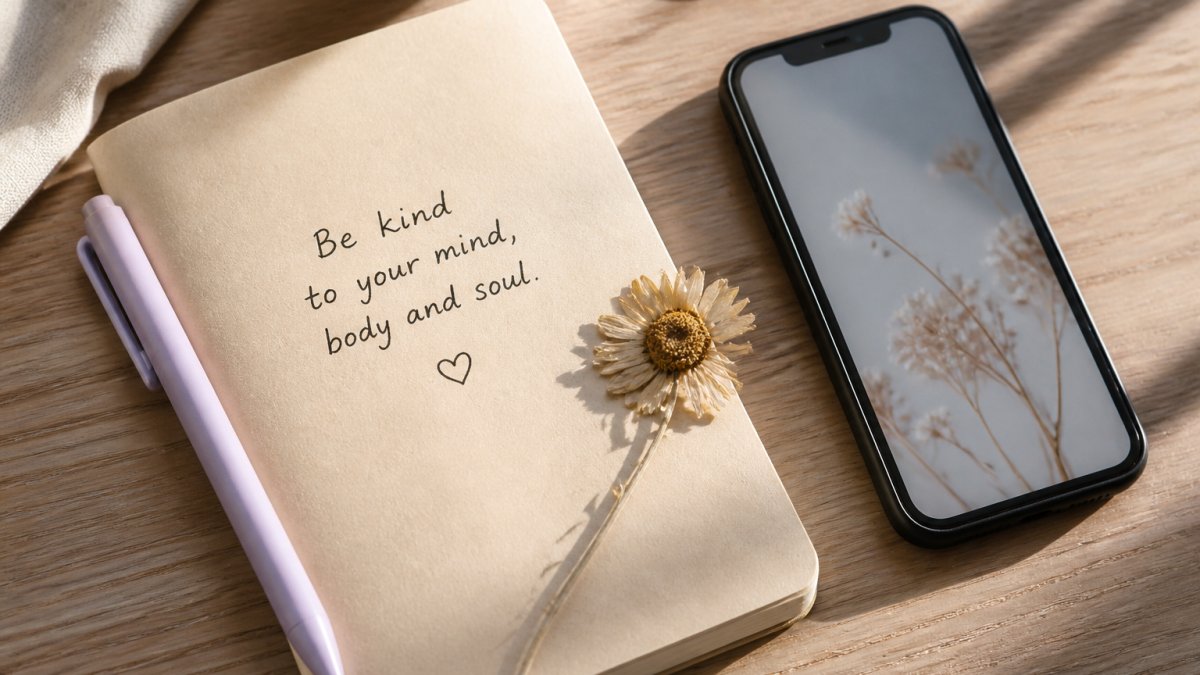
Type: one family, two weights, one size decision
Start with a single typeface and two weights at most. A clean sans-serif at a large size beats a decorative font at any size, because the goal is legibility, not personality.
The size decision is where most designs fail. Set the quote as large as the format allows, then cut words until it fits, never shrink the type to fit more words.
Line breaks matter as much as size. Break on meaning, not on character count. "Breathe. / Begin again." reads as two instructions; "Breathe. Begin / again." reads as a mistake.
Color: contrast first, mood second
Beige, off-white, and soft pastel purple are popular because they lower contrast just enough to feel gentle while staying readable. But "just enough" is the operative phrase: keep text dark against a light ground, or the reverse.
Pick the background from your palette, then choose the text color for contrast, not harmony. If text and background are too close in value, the design is not minimal, it is illegible.
Space: the variable people cut first
Leave margins wider than feels comfortable. Center the line optically rather than mathematically, since a line ending in a period carries more visual weight on one side. Whitespace tells the eye where to land.
On a phone lock screen, reserve the top third for the clock and notifications and the bottom edge for the swipe area. On a desktop wallpaper, keep the center clear of icons and place the quote slightly off-center.
Format-specific sizing and safe areas
A design that only works at one size does not work. Build the quote once and adapt it per format:
- Phone wallpaper: portrait orientation, quote in the middle third, top third clear for the clock.
- Desktop wallpaper: landscape orientation, quote offset from center, edges clear for icons.
- Tablet: treat as a large phone, same safe areas, larger type.
Accessibility and readability checks
Accessibility matters here too. Keep body text at a comfortable reading size, avoid thin weights on light backgrounds, and check that the text remains legible when the screen dims.
If you want to carry the same rules into what you wear, the apparel section below applies them to fabric and print placement.
Each format has its own safe area and sizing rule, so build the quote once and adapt it per format.
Format | Orientation | Key rule |
|---|---|---|
Phone wallpaper | Portrait | Quote in middle third, top third clear for clock |
Desktop wallpaper | Landscape | Quote offset from center, edges clear for icons |
Tablet | Large phone | Same safe areas, larger type |
Frame-safe margin | Check line at actual print size | |
Apparel | Single short line | Clean type across the chest reads as intentional |
Positive Message Apparel: Wearing Your Intentions
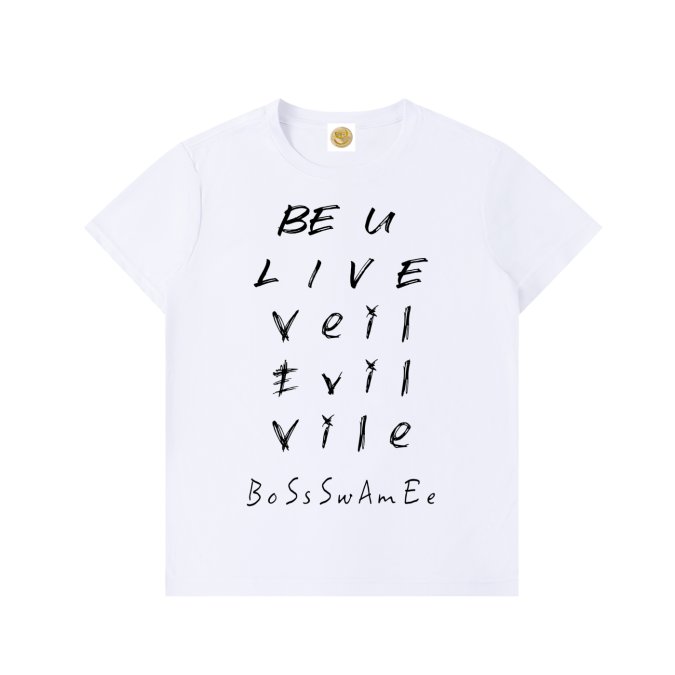
Positive message apparel turns the same design rules into something you wear.
Print placement decides most of it. A single short line across the chest, set in clean type, reads as intentional.
Fabric and cut carry the rest.
Our own approach keeps the wording short and the palette quiet.
If you want to see how the pieces sit together in a real wardrobe, you can browse the BoSsSwAmEe collection and judge the aesthetic against your own.
Organizing Messages by Mood and Making Them Personal
Organizing positive messages by mood turns a pile of quotes into something you can actually use.
A simple four-bucket system works:
- Morning lines for starting, like "small steps every day."
- Reset lines for hard afternoons, like "breathe, begin again."
- Evening lines for closing the day without judgment.
- Hard days lines that ask nothing of you except to keep going.
Personalization is where most collections stop. A quote that means something to you usually needs one small edit: a name, a date, a phrase from a conversation.
If you want help matching messages and pieces to your own taste, our personalized style advice explains how that conversation works.
Building a Positive Message Wardrobe with BoSsSwAmEe Design
Building a positive message wardrobe means choosing a small number of pieces that share one visual language, then rotating the messages rather than the aesthetic.
Start with one anchor piece in your dominant palette. Add a second in a contrasting tone.
For the full sequence, our step-by-step guide on building a positive wardrobe lays out the order to buy in and what to skip.
Frequently Asked Questions
What makes a quote design look minimalist?
A minimalist quote design relies on three things: generous white space, one or two typefaces, and a restrained color palette. The quote itself carries the visual weight, so decorative elements stay secondary. A single line of text centered on a beige or pastel background often reads as more intentional than a busy collage. Keeping margins wide and limiting yourself to one accent color helps the message stand out without visual noise.
How do you choose a positive message for a minimalist design?
Start with the feeling you want the reader to have, then pick a short phrase that matches it. Self-acceptance messages like 'you are enough' suit calm, neutral layouts, while 'small steps every day' works well for daily reminders. Keep the quote under ten words so it fits cleanly in a phone wallpaper, poster, or apparel graphic. Test the phrase at small size first: if it still reads clearly, it will hold up across formats.
What colors work well for minimalist quote designs?
Beige, off-white, soft grey, and pastel purple are reliable bases because they keep text legible and the mood calm. Pair a dark charcoal or muted navy text color with those backgrounds for contrast. If you want a warmer feel, add one accent such as dusty pink or sage green rather than several. The goal is contrast for readability plus restraint, so two or three colors total is usually enough for a clean, aesthetic result.
How can positive messages be incorporated into clothing and accessories?
Look for pieces where the message is part of the design rather than an afterthought: a short phrase in clean typography, a small smile motif, or a subtle embroidered word. Positive message apparel works best when the garment is comfortable enough to wear often, so the reminder becomes part of your daily routine. Choose neutral or pastel colorways if you prefer a minimalist look, and let one uplifting detail carry the message.
The hard part is not finding positive words. It is choosing few enough of them, and setting them well enough, that they still land on the hundredth reading. That is the work we do at BoSsSwAmEe Design: short messages, quiet palettes, comfortable pieces, and personalized style advice to help you match both to your own taste. Get started with BoSsSwAmEe Design and build a wardrobe that reminds you, daily, to love yourself first.